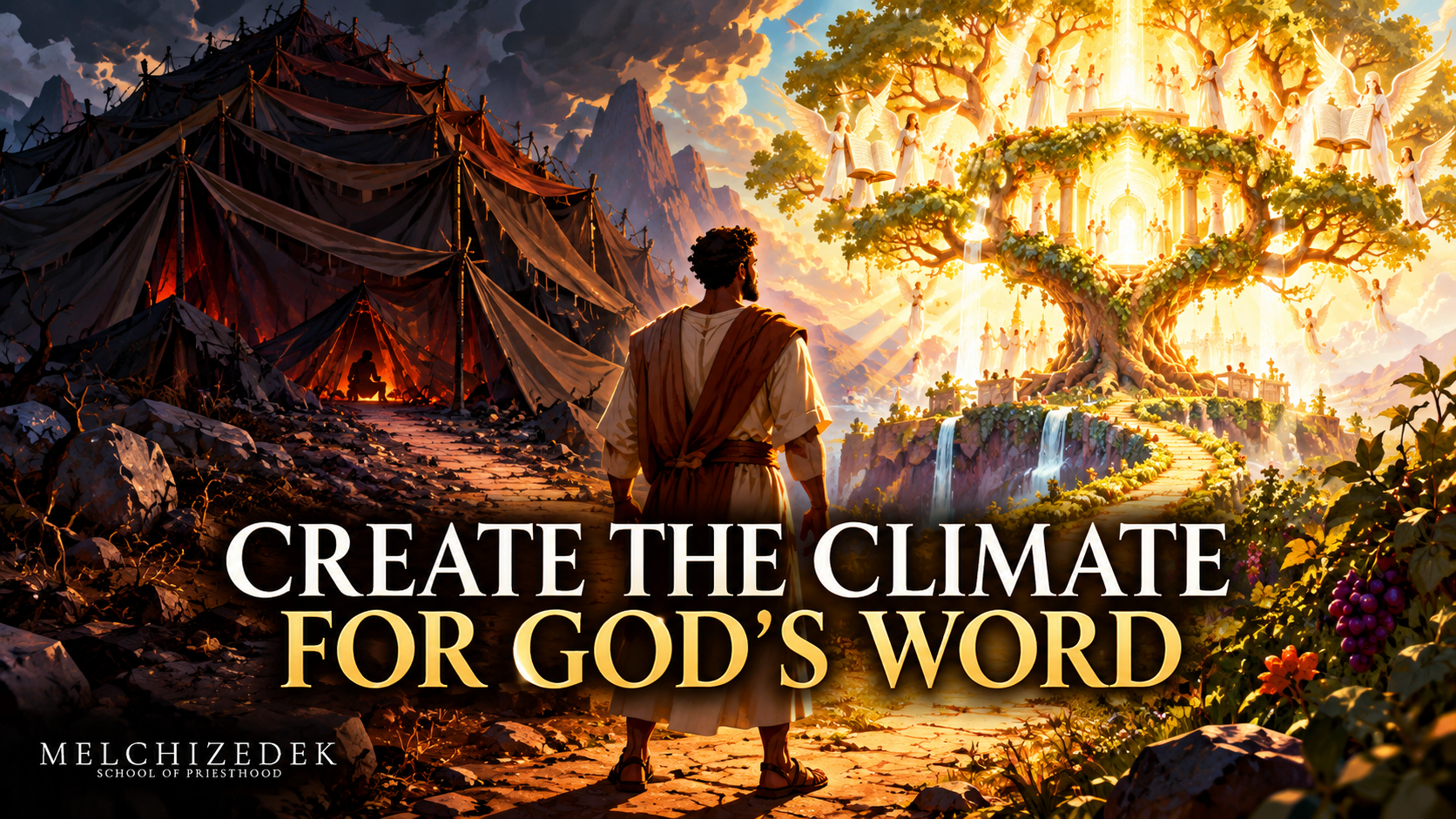
Building a Tabernacle Through Repeated Encounters with God
Francis Isibor Jr
Source:
Melchizedek School of Priesthood
Oct 8, 2026 • 2 views
• August 14, 2025 • 160 views
After extended worship and a recap of earlier teaching on wise sonship, inheritance and forgiveness, the first contributor connects Matthew 7:6 with the need to value what God entrusts to believers. The dogs-and-swine imagery is applied to dispositions that return to an abandoned way of life or fail to recognize spiritual treasure. Galatians’ immature heir and the treasure in earthen vessels in 2 Corinthians 4 support a call to grow into responsible sonship. A typological journey through the outer court, holy place and most holy place contrasts natural priorities with perception shaped by the word and Spirit. Ephesians’ promised Spirit is presented as the enabling power for this development, rather than human strength alone. The treasure and pearl parables lead to the cost of discipleship: recognizing the value of divine life should reorder competing attachments. The rich ruler is contrasted with the person who joyfully sells for the treasure, while Luke 14’s builder supplies the language of counting the cost. After prayer, a second contributor develops Romans 8 in context, interpreting Spirit-led sonship as transformed desires and conduct rather than merely receiving directions about everyday choices. Birth, adoption, family resemblance and estate management become analogies for growth into responsibility. Luke 1’s “holy thing” and Revelation 21’s pearl gates are joined in a further typological argument about sonship and access to God’s life; these connections are the speaker’s interpretation, not direct definitions supplied by those passages. The final and longest practical movement connects 1 Corinthians 2:14 with Hebrews 5:14: discernment matures through repeated exercise, and natural-minded resistance is not overcome by collecting isolated spiritual experiences. The second contributor describes progressively limiting gaming and social-media time while replacing it with prayer, worship and Scripture, then urges listeners to build realistic structures that nourish desire for God. The message favors continuing practice over admiration of a sermon and uses Moses, spiritual-warfare imagery and personal encounter stories as illustrations. A call to persistent seeking leads into congregational prayer for desire, wisdom and obedience, communion declarations, historical notices and closing grace. Claims about spiritual manifestations, unanswered prayer and bodily healing remain attributed religious testimony or interpretation.
Study note: Caption-based study. Scripture references include explicitly cited passages, speaker allusions and editorial supporting connections. Prayer points are editorial reflections, not verbatim quotations.
Recognize the treasure. Editorial prayer: Father, teach us to value your life and let that value reorder our priorities.
Receive the Spirit’s formation. Editorial prayer: Shape our conduct and desires through your Spirit, with humility and careful attention to Scripture.
Grow in discernment. Editorial prayer: Give us patience for steady practice and wisdom to discern without pride.
Put hearing into practice. Editorial prayer: Help us make a realistic beginning and continue in prayer, love and obedience.
Francis Isibor Jr
Oct 8, 2026 • 2 views
Francis Isibor Jr, Francis Isibor Snr
Oct 1, 2026 • 1 view

Francis Isibor Jr, Francis Isibor Snr, Samson Ototobor
Sep 24, 2026
Chuddy Ubajekwe, Francis Isibor Jr, Samson Ototobor
Sep 17, 2026 • 11 views