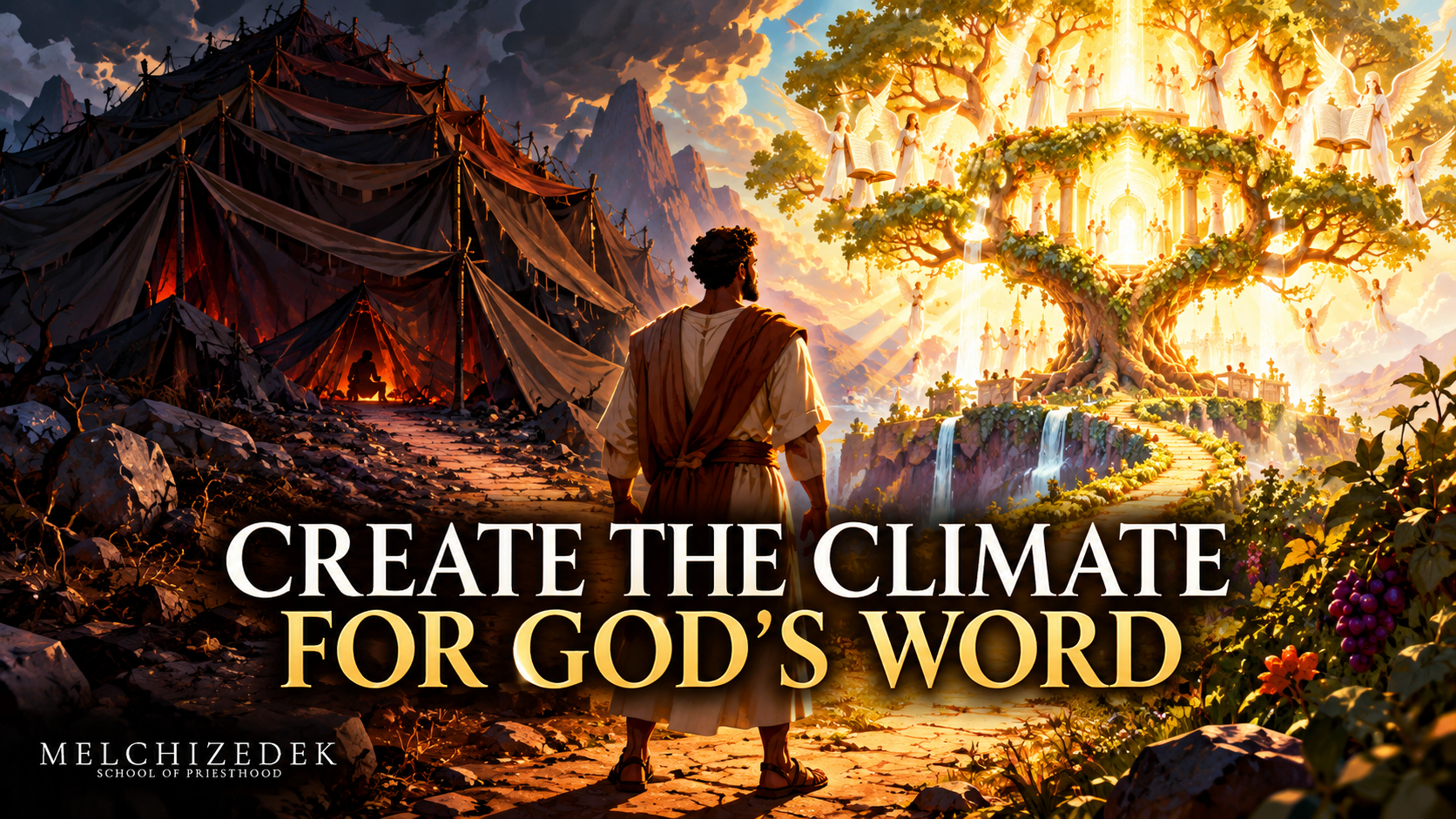
Building a Tabernacle Through Repeated Encounters with God
Francis Isibor Jr
Source:
Melchizedek School of Priesthood
Oct 8, 2026 • 2 views
• September 4, 2025 • 171 views
After opening worship, participants review the preceding meeting’s themes of sonship, responsible care for the Father’s estate, the Samaritan woman, worship in spirit and truth, mercy and transformation. A preliminary exhortation warns that familiarity with teaching can coexist with a hardened heart; apparent strength and religious status do not replace teachability. The main teacher then asks who Yeshua is and why the Father exalts him. Hebrews 1 and Colossians 1-2 provide the central language: the Son as the radiance of God’s glory, the exact expression of his person, heir of all things, and the one in whom fullness dwells. The teacher links believers’ inheritance and membership in Christ’s body to learning his character rather than accepting a permanently inadequate self-understanding. The message develops Jesus’ obedient life, death and exaltation as the pattern for maturity. Guarding the heart and bringing thoughts into obedience are emphasized through Proverbs and 2 Corinthians 10. Psalm 110 and Hebrews 1 connect sonship, priesthood, righteous rule and the angels’ ministry. Elisha’s request for a double portion and the prodigal son are interpreted through inheritance, repentance and restored responsibility. The teacher warns against being elevated as a spiritual celebrity and treats trials as occasions to refuse sin, expressly saying he is not advising people to sin. Audience questions about the prepared body and Paul’s marks lead into discussion of Adam, Cain, lineage and Christ’s birth. Explanations of spirits, ancestral access and the body are speculative theological claims; the archive does not turn them into anthropology, genetics or established history. A later contribution compares Hebrews 10 with Psalm 40, presenting the prepared body as an opened ear that delights in God’s will. Romans 12 then supports renewed desires, whole-person offering and a life governed by the Spirit. The contributor also makes specific assertions about Mary, biological ancestry and changes to DNA through faith; these are not verified biology or medical mechanisms. In response to a question, God’s will is described as a continuing way of life rather than only guidance for major decisions, careers or gifts. Further exhortation returns to the heart: willing response, fruitful conduct and valuing wisdom like treasure are contrasted with hearing without change. Prayer asks for understanding and pursuit of true riches, followed by communion, historical conference and evangelism notices, shared grace and dismissal. The final music is postdismissal.
Study note: Caption-based study. Scripture references include explicitly cited passages, speaker allusions and editorial supporting connections. Prayer points are editorial reflections, not verbatim quotations.
See Christ clearly. Editorial prayer: Father, help us learn Christ and reflect his compassion, purity and meekness.
Guarded and receptive hearts. Editorial prayer: Keep our hearts teachable and help us refuse thoughts and actions that harm our walk with you.
Joyful obedience. Editorial prayer: Open our ears and reshape our desires so that we delight in doing your will.
Fruitful practice. Editorial prayer: Let what we hear become patience, faithfulness and loving conduct in daily life.
Francis Isibor Jr
Oct 8, 2026 • 2 views
Francis Isibor Jr, Francis Isibor Snr
Oct 1, 2026 • 1 view

Francis Isibor Jr, Francis Isibor Snr, Samson Ototobor
Sep 24, 2026
Chuddy Ubajekwe, Francis Isibor Jr, Samson Ototobor
Sep 17, 2026 • 11 views
 1 shared theme
Sep 6, 2025 • 204 views