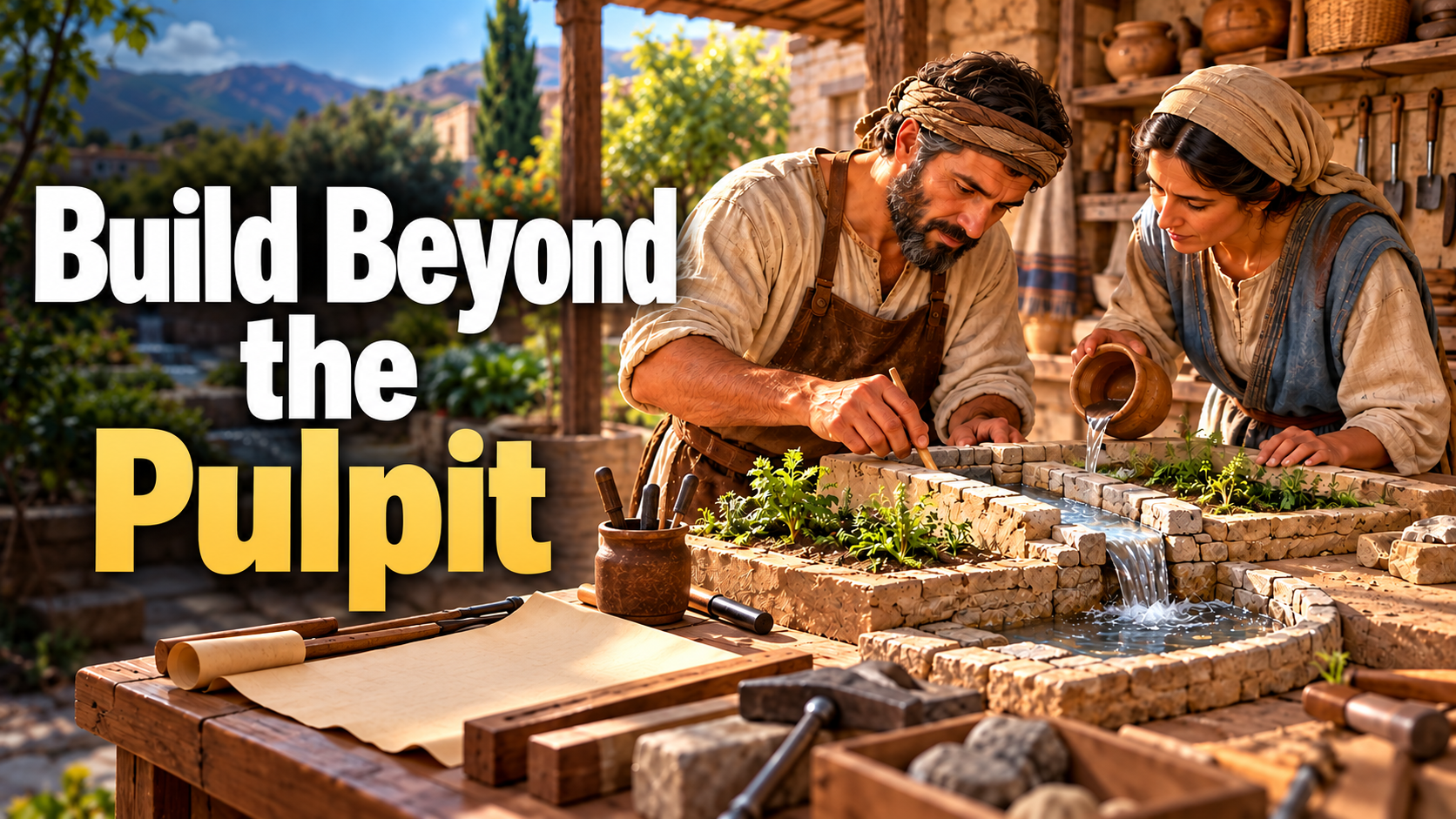
Crafting the Civilization of the World to Come
Francis Isibor Snr
Source:
Open Heavens 2025
Jun 13, 2025 • 395 views
• June 6, 2025 • 944 views
This day-two Open Heaven Conference stream presents the “Melchizedek epoch” as a call for believers to mature into an active, shared priesthood under Christ. Opening worship joins obedience and humility to the image of Jesus enthroned. After the welcome, the first teacher reads Psalm 110 alongside Abraham’s encounter with Melchizedek and Revelation 19, interpreting the feast after battle as spiritual victory and the harvest of people and territories. She argues that prayer, meditation, worship, patient faith and ongoing watchfulness belong to a lifelong task rather than a short campaign. Her examples extend to families, marriages and communities, while she explicitly rejects hatred and physical conflict as the weapons of this warfare. The second teacher adds a strong emphasis on the blood of Jesus and then develops Hebrews 5-6: new birth initiates believers into a priestly calling, but sustained instruction and practiced obedience are needed for discernment and maturity. She locates maturity in conduct rather than office, eloquence or years in church. Humility, freedom from offense and attention to people rather than money prepare believers, in her account, both to become God’s dwelling and to participate in righteousness and justice. Her warnings against untrained confrontation qualify the earlier calls to spiritual warfare. The second teacher’s husband and several contributors extend the discussion from individual devotion to culture and civilization. They portray priesthood as the power behind covenants and historical societies, contrast the Levitical order with life in Christ, and describe the latter through death to the old life and the emergence of a whole nation of priests rather than dependence on one prominent minister. They advocate room for creativity, trades, technology and gifts beyond the pulpit, while criticizing exploitative ministry and reducing faith to material acquisition. Some accompanying claims about ancient spiritual powers, science, quantum computers, space agencies and the origins of inventions are speculative assertions or reported visions, not established explanations. The morning section ends with prayer, a salvation invitation, teaching-school announcements, communion and a blessing. Extended worship and repeated opening material occupy the interval before a clearly announced later prayer session, which asks for enlightened understanding, freedom from the course of the world and renewed devotion. After another long worship interval, the evening teacher, subsequently thanked as Pastor Samson, turns the emphasis inward. Using Adam’s garden, Isaiah 40 and Hebrews 5, he interprets priestly service as cultivating the heart, responding to God’s word and surrendering malice, hypocrisy and envy. He insists that prayer and the word belong together and that lengthy prayer without changed character does not reveal God. Childlike humility, rather than physical coercion or pursuit of political office, is his picture of mature spiritual authority. The final questions ask how the teaching can spread, what discipleship requires and how younger believers can find mentoring. The male host argues that communicating information differs from forming Christ’s life in people, and reads Ephesians 4, Philippians 2 and John 17 toward an interdependent body: every member contributes, leaders must nurture gifts rather than suppress rivals, and mutual honor replaces the solitary “champion.” He describes discipleship as costly, sustained imitation of Christ and uses a crooked wall that must be rebuilt as an analogy for faulty foundations. His wife then explicitly qualifies the equality emphasis: there are fathers and recognized pillars in the faith, and she says God may give one person a message for a generation. Reading 2 Timothy 2 and 1 Timothy 4, she brings the outreach question back to faithful people teaching others, exemplary living, reading, meditation and continued attention to doctrine. She commends foundational training and discipleship following evangelistic events before the closing prayer and dismissal. This record preserves those different emphases rather than flattening them into a single voice. Claims that spiritual practices guarantee safety or health, the second teacher’s anti-vaccine statements and immunity claims, and allegations about public institutions are attributed source content, not medical advice, verified facts or guarantees. “Death” and “shedding blood” in the practical exposition are treated as the speakers’ language for surrendering sinful patterns, never as instructions to injure oneself or others.
Study note: Caption-based study. Scripture references include explicitly cited passages, speaker allusions and editorial supporting connections. Prayer points are editorial reflections, not verbatim quotations.
A courageous and loving heart. Editorial prayer: Father, deepen our concern for people and our steadiness in prayer. Keep us harmless, free from hatred and willing to serve patiently rather than seek visible spiritual status.
Wisdom for responsible service. Editorial prayer: Teach us through your word and Spirit. Give us discernment, humility and contentment, and form gifts that help people in our communities and ordinary work.
A heart that displays Christ. Editorial prayer: Expose malice, envy, hypocrisy and pride in us. Help us respond to your word, join prayer to obedience and grow in the gentleness of Christ.
Faithful, shared discipleship. Editorial prayer: Build us together in love. Help leaders nurture others without rivalry, help learners receive wise correction, and make us faithful examples who can pass on truth with care.
Francis Isibor Snr
Jun 13, 2025 • 395 views
Jun 7, 2025 • 741 views

Francis Isibor Snr
Jun 5, 2025 • 262 views
Jun 5, 2025 • 113 views