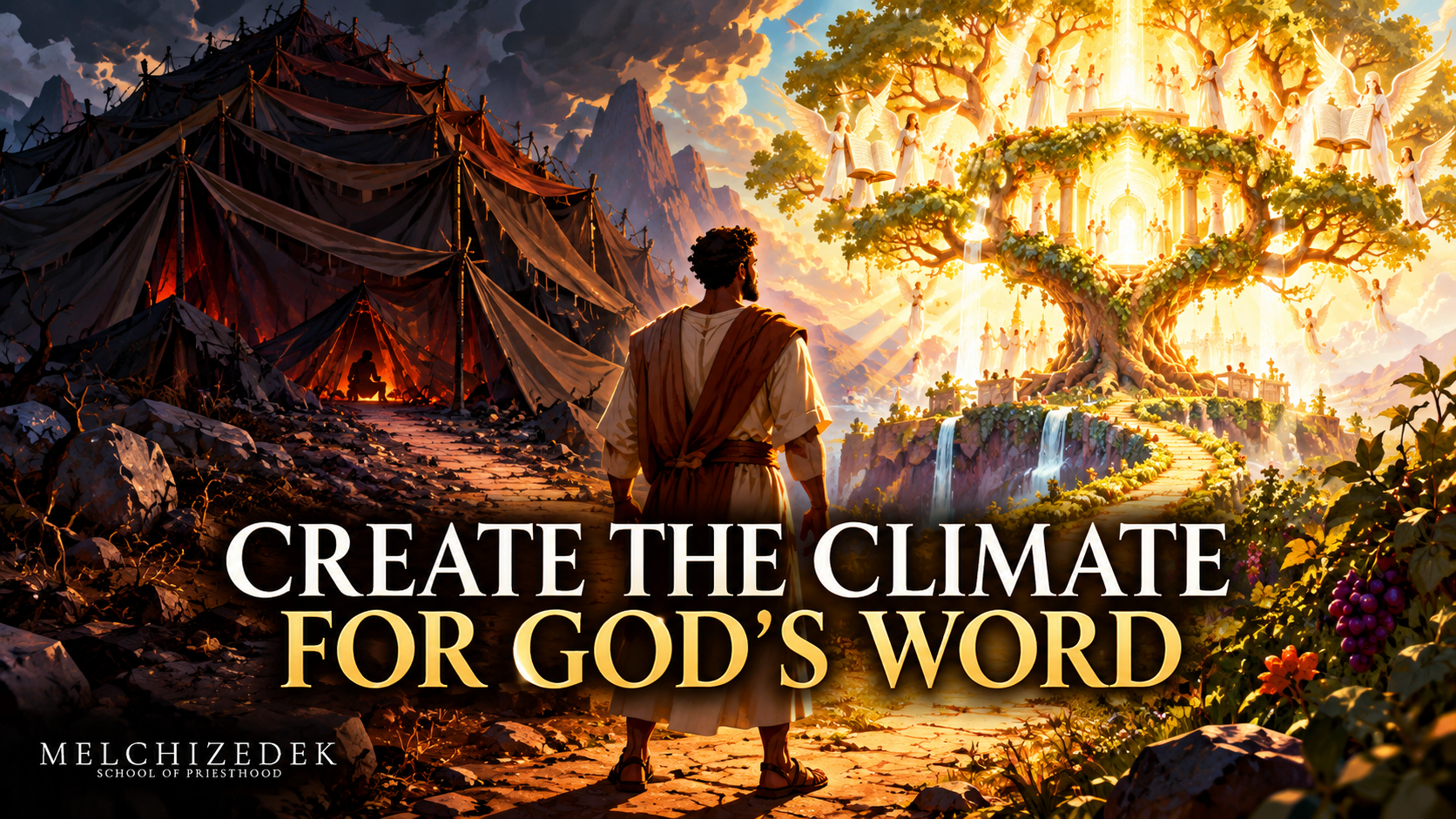
Building a Tabernacle Through Repeated Encounters with God
Francis Isibor Jr
Source:
Melchizedek School of Priesthood
Oct 8, 2026 • 2 views
• February 6, 2025 • 182 views
After worship and a reminder to connect successive teachings, the school studies Jacob’s wrestling in Genesis 32. The speaker reads the encounter as a struggle for the blessing to become a changed nature, rather than merely acquiring possessions. Names are interpreted as expressions of character, and Jacob’s return under God’s instruction becomes a pattern of obedience, persistence and readiness. Ephesians 6 then frames Christian wrestling as a spiritual struggle requiring God’s armor. The speaker asks listeners to understand their particular calling and inheritance before using the language of warfare, drawing on Abraham, Israel’s journey and priestly responsibility through a strongly typological reading. The main exposition moves to Ephesians 1: believers are already blessed in Christ, yet need the Holy Spirit’s wisdom and revelation to understand and participate in that inheritance. A palm-kernel illustration distinguishes possessing a blessing from accessing its contents. Matthew 28, Mark 16 and Matthew 18 connect Christ’s authority, discipleship, agreement and the gathering of heaven and earth in him. The teacher presents maturity and Christlike life as the harvest God seeks, and warns that a victory does not remove later temptation. The school’s language of bloodline, DNA and genetic change describes its account of spiritual inheritance and transformation; it supplies no scientific evidence of changed genes or biological status. The extended discussion makes the central application more concrete: spiritual wrestling includes changing conduct, priorities and responses, rather than simply repeating commands at hostile powers. Moses, Aaron, Hur and Joshua illustrate complementary service for the whole people, while participants question ambition, comparison and ministry measured only by material gain. A direct question asks what change should actually look like, and the answers point to recognizing conduct inconsistent with Christ, receiving correction and redefining success. The closing appeal is to engage the Lord through the Word and Spirit, followed by prayers for righteousness and peace, communion and conference notices. Claims about invisible powers, immortality and bodily redemption remain attributed theological claims; the practical focus is ethical growth, perseverance and mutual responsibility.
Study note: Caption-based study. Scripture references include explicitly cited passages, speaker allusions and editorial supporting connections. Prayer points are editorial reflections, not verbatim quotations.
Date note: The displayed date is a source-labelled meeting date; an independent publication/livestream date was not recoverable from the supplied record.
Clarity of calling. Lord, help us understand the hope of our calling and prepare faithfully for the responsibilities before us.
Wisdom and revelation. Give us wisdom and enlightened understanding so that we receive your Word with humility and discernment.
Changed priorities. Show us attitudes and actions inconsistent with Christ, and help us respond to correction with honesty and changed conduct.
Shared righteousness and peace. Make us faithful to one another, ready to support the whole community and to pursue righteousness and peace.
Francis Isibor Jr
Oct 8, 2026 • 2 views
Francis Isibor Jr, Francis Isibor Snr
Oct 1, 2026 • 1 view
Francis Isibor Jr, Francis Isibor Snr, Samson Ototobor
Sep 24, 2026
Chuddy Ubajekwe, Francis Isibor Jr, Samson Ototobor
Sep 17, 2026 • 11 views