The Life of Christ Expressed Through True Fellowship
Clever Odiah, Samson Ototobor
Source:
Ministers Rest
Oct 5, 2026 • 1 view
• August 25, 2025 • 117 views
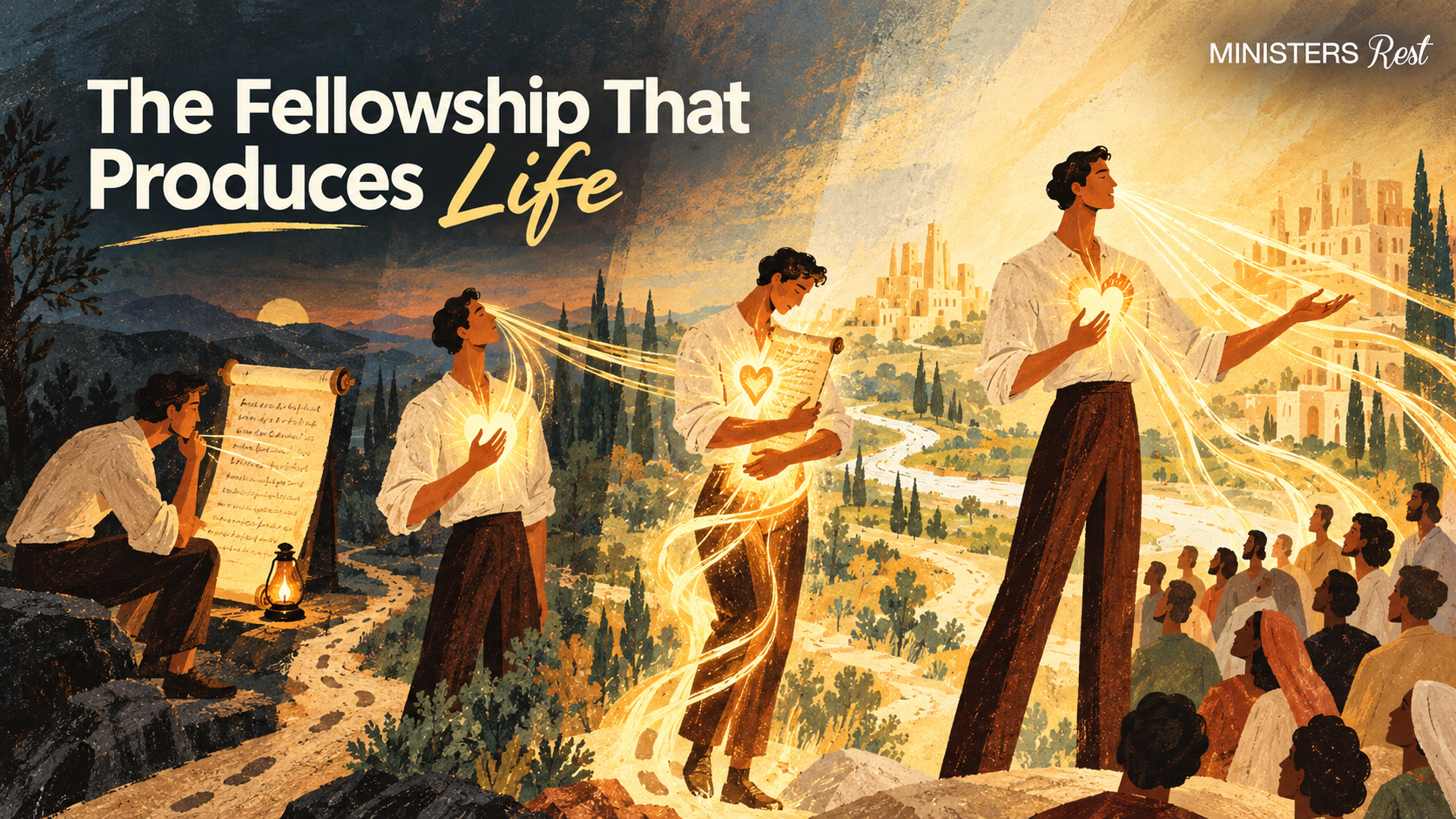
The meeting opens with thanksgiving for redemption, unity and inheritance, followed by prayers from Joshua 18, Ephesians 1, Hebrews 4 and Isaiah 11 for enlightened understanding, rest and humble fellowship. Extended worship is followed by a moderated review of the previous week. Participants ask how kingdom teaching can reach existing churches without contempt. The moderator emphasizes edifying speech, communication skills and learning from one another. When the main teacher begins, he defines his assignment as helping build apostolic centers and kingdom communities. Criticism, he argues, must be joined to the ability to build something better. A device-related delay includes a lengthy technology digression, while the practical discussion proposes reports about what participants are actually implementing. Contributors then raise concerns about manipulative ministry practices and the responsibility that comes with revelation. The main exposition calls for Christ to be formed in people rather than ministry being organized around a founder’s status or permanent dependency. It presents mutual contribution, accountable relationships and shared mission as the basis of community. Biblical house gatherings and Antioch are discussed, but the speaker expressly allows different meeting spaces and warns that intimate fellowship can become inward-looking if it loses its outward commission. Ephesians 5:21-27 supplies mutual submission and the image of a cleansed, glorious church. Third John 9-10 and Revelation 2:6,15 are then interpreted through two controlling patterns: Diotrephes’ desire for preeminence and a Nicolaitan tendency to dominate people. The speaker says these tendencies can be present in himself and his listeners, and that leaders should be challengeable. His broader claims about church history, eschatology and political systems remain attributed interpretations rather than verified conclusions. The discussion tests these ideas through questions about bishops’ clothing, Hebrews 11’s pilgrims, the speaker’s rejection of an escapist rapture framework, the historical identity of Nicolas, and the difference between correction and domination. The moderator challenges unsupported historical conclusions and speculation about another person’s motives; the teacher agrees that the behavioral principle can be examined even without resolving the identity claim. On correction, the response emphasizes teaching, recognized service, mutual learning and taking unresolved offense to the person concerned, while preserving orderly discussion. The final exhortation is to examine one’s own leadership rather than collect information about others. Two ministers describe their Uganda trip and receive commissioning prayer. Conference and retreat notices, communion, shared-support administration and birthday blessings follow. A farewell closes the gathering before the long incidental and music tail.
Study note: Caption-based study. Scripture references include explicitly cited passages, speaker allusions and editorial supporting connections. Prayer points are editorial reflections, not verbatim quotations.
Truth with love. Father, help us communicate clearly, listen humbly and speak in ways that build people up.
Christ formed in community. Shape our service so that people grow in Christ rather than depend on our status or personality.
Reciprocal responsibility. Teach us to receive correction, contribute faithfully and carry your purposes beyond our immediate circle.
Freedom from domination. Expose pride and controlling habits in us, and help us lead through love, service and honest accountability.
Clever Odiah, Samson Ototobor
Oct 5, 2026 • 1 view

Francis Isibor Snr, Samson Ototobor
Sep 28, 2026 • 1 view
Clever Odiah, Francis Isibor Snr
Sep 21, 2026 • 1 view
Francis Isibor Snr, Samson Ototobor
Sep 7, 2026 • 3 views