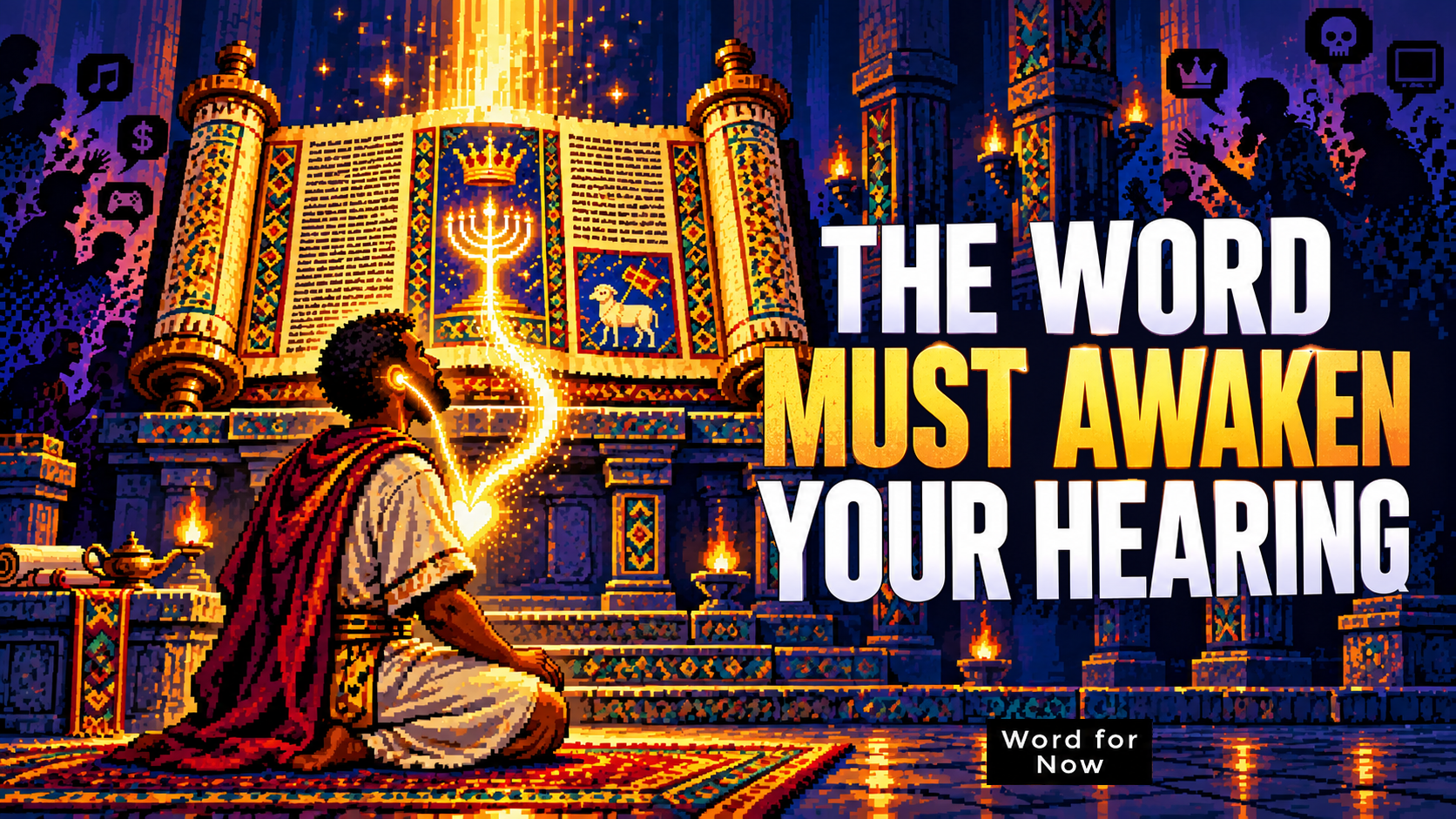
The Groanings of the Spirit and the Manifestation of Sons
Francis Isibor Jr
Source:
Word for Now
Oct 5, 2026 • 4 views
Francis Isibor Jr • February 3, 2025 • 3 views
After a music opening, welcome and prayer, the speaker argues that Jesus should be understood as the intended culmination of human life rather than reduced to a religious figure. He affirms Christ’s deity while stressing the human path of obedience and development, then uses Matthew 16:27 and a word-study claim about sonship to describe maturity. The cross and the Spirit’s leading are presented as the way of becoming like Christ. Political remarks, fictional universes and examples of bodily or technological augmentation illustrate his contrast between patient formation and shortcuts to power; those comparisons remain his illustrations rather than evidence for the underlying spiritual claims. A long second movement considers artificial intelligence and other technological shifts. The speaker describes AI products, military applications and the possibility of machine counsel displacing dependence on the Spirit, while also expressing fascination with the tools. He argues that culture, creativity and technology can carry a spiritual message, using the tabernacle, Solomon’s throne and the printing press as examples. Some of these historical and technical claims are speculative or unverified. His practical question is what the church will communicate through a changing era, rather than whether technology by itself should be labeled wholly divine or wholly demonic. The main priesthood exposition presents Eden as a place of preparation for divine likeness, and the Melchizedek order as the intended culmination of humanity. Philippians 3, Revelation 20-21, Romans 1, Hebrews 7 and Matthew 28 support the speaker’s account of bodily transformation, authority and creation’s renewal. He then speculates about believers learning unfinished lessons in future ages. The closing application turns from spectacular capacities to desire: receiving a possession is less important, in his account, than growing in faith and knowing Christ. Abraham and Philippians 3 are used to warn against making gifts, ministry success or wealth the final goal. The session ends with a conference announcement about the era of Melchizedek.
Study note: Caption-based study. Scripture references include explicitly cited passages, speaker allusions and editorial supporting connections. Prayer points are editorial reflections, not verbatim quotations.
Follow Christ’s way. Jesus, shape our ambitions through your example and give us patience for faithful growth rather than shortcuts to power.
Use tools with wisdom. Father, help us use creativity and technology to communicate truth and serve people, with discernment about their limits and risks.
Read with humility. Spirit of God, deepen our understanding of Christ and teach us to distinguish Scripture from our own assumptions.
Value the giver above gifts. Lord, keep our desire for you alive when needs are met and when success comes, and form gratitude rather than covetousness.
Francis Isibor Jr
Oct 5, 2026 • 4 views

Francis Isibor Jr
Sep 21, 2026 • 1 view
Francis Isibor Jr
Mar 9, 2026 • 17 views
Francis Isibor Jr
Mar 2, 2026 • 9 views
Francis Isibor Jr
Oct 8, 2026 • 2 views
Francis Isibor Jr
Oct 5, 2026 • 4 views
Francis Isibor Jr, Francis Isibor Snr
Oct 1, 2026 • 2 views
Chinyere Isibor, Francis Isibor Jr
Sep 26, 2026